

15+
Years Experience











15+
Years Experience
120K+
Monthly Transition
100+
Global Clients
40+
Countries
Manual data entry from incoming PDF and scanned invoices
Errors in supplier data, VAT, and PO matching
Slow AP turnaround and missed discount windows
AP headcount needed to scale with invoice volume
Limited audit trail across multiple invoice sources
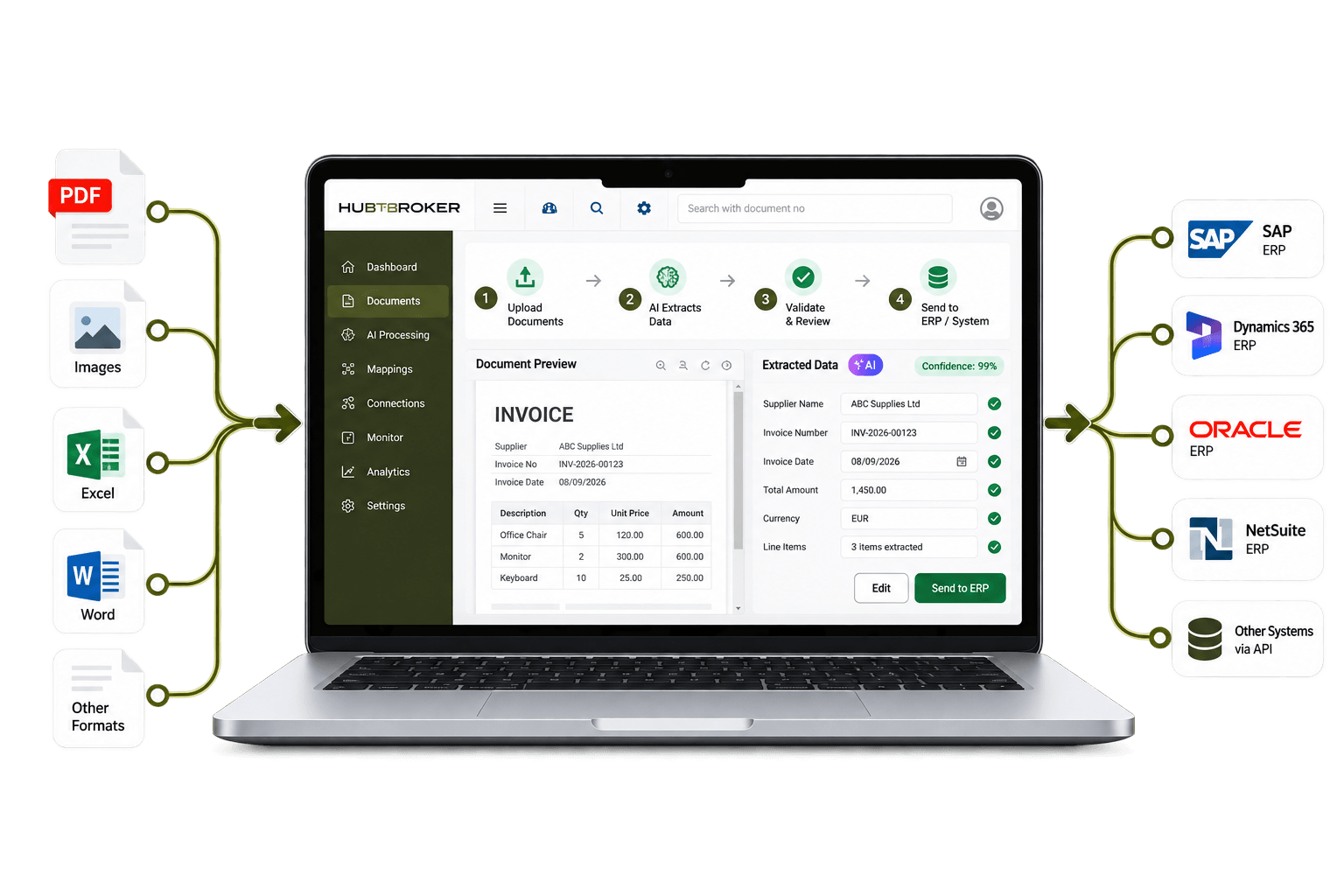
AI capture from PDFs, scans, emails, and portals
Validation against supplier, tax, and PO rules
Faster posting and supplier payment cycles
Automation absorbs routine volume without new hires
Full audit trail per invoice in one system
Let's schedule a demo and discover how our integration platform connects your apps and automates processes.
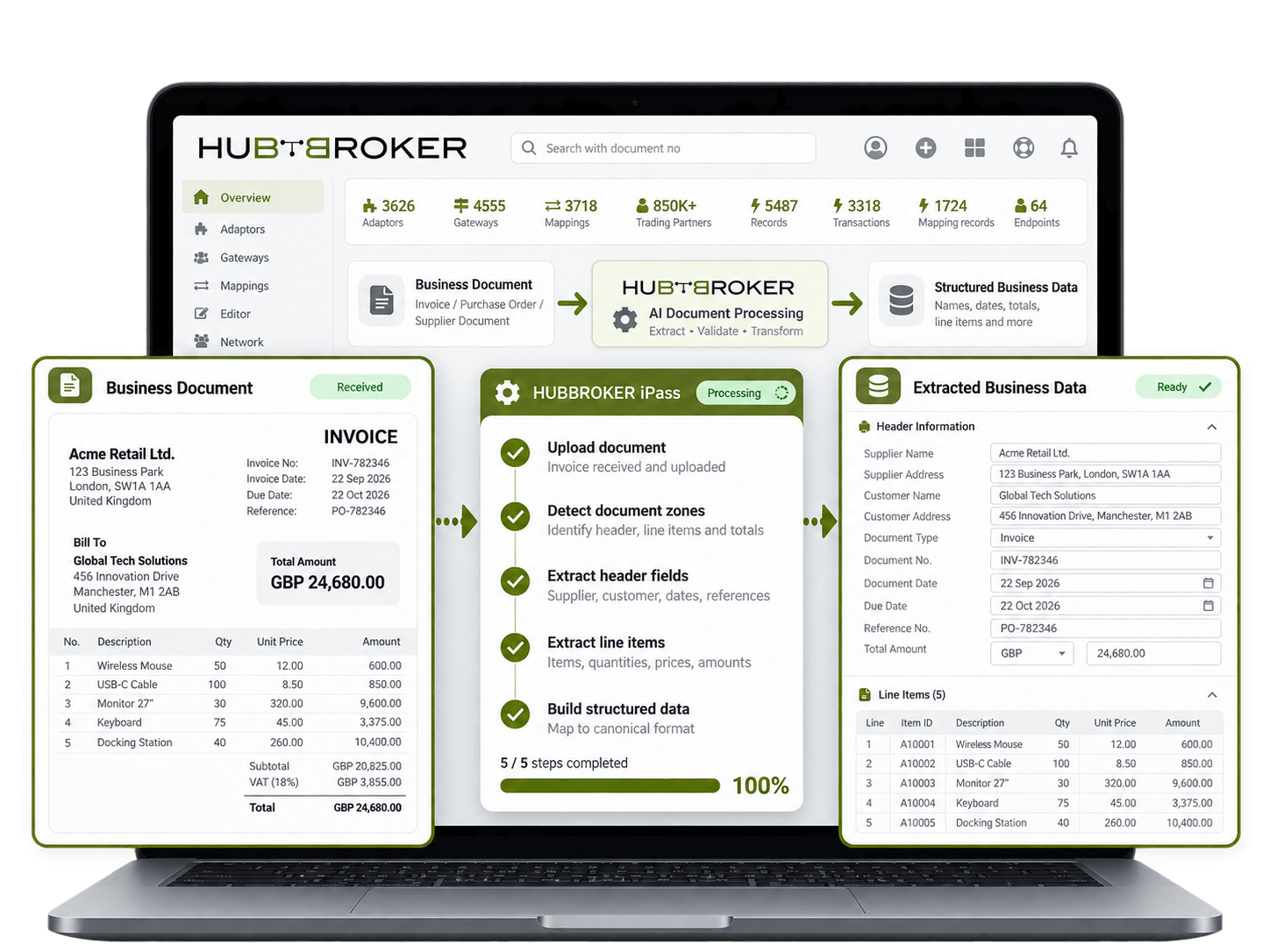
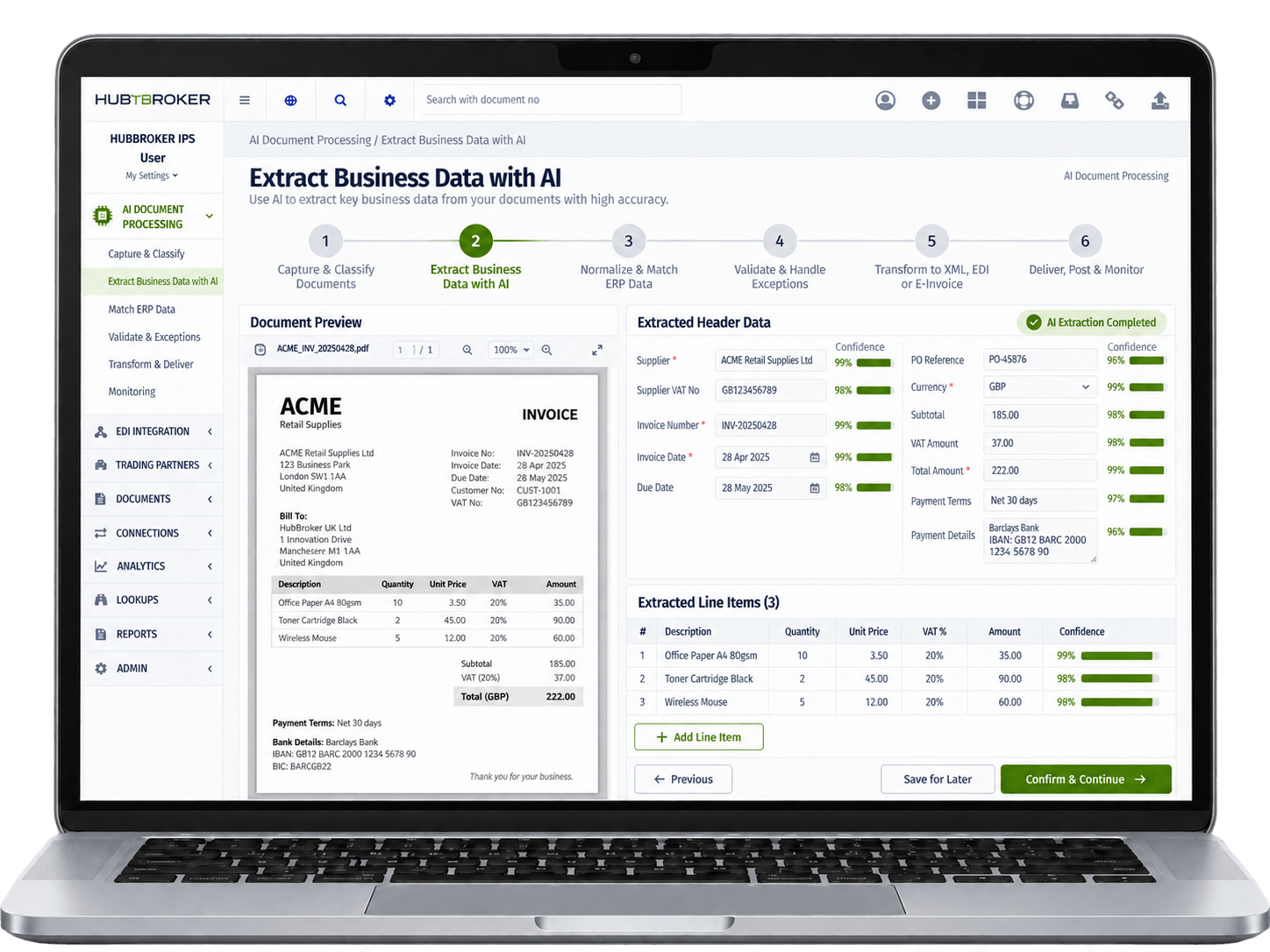
Extract key details such as names, dates, totals, references and line items from invoices, orders and other business documents so teams do not need to enter the same information manually.
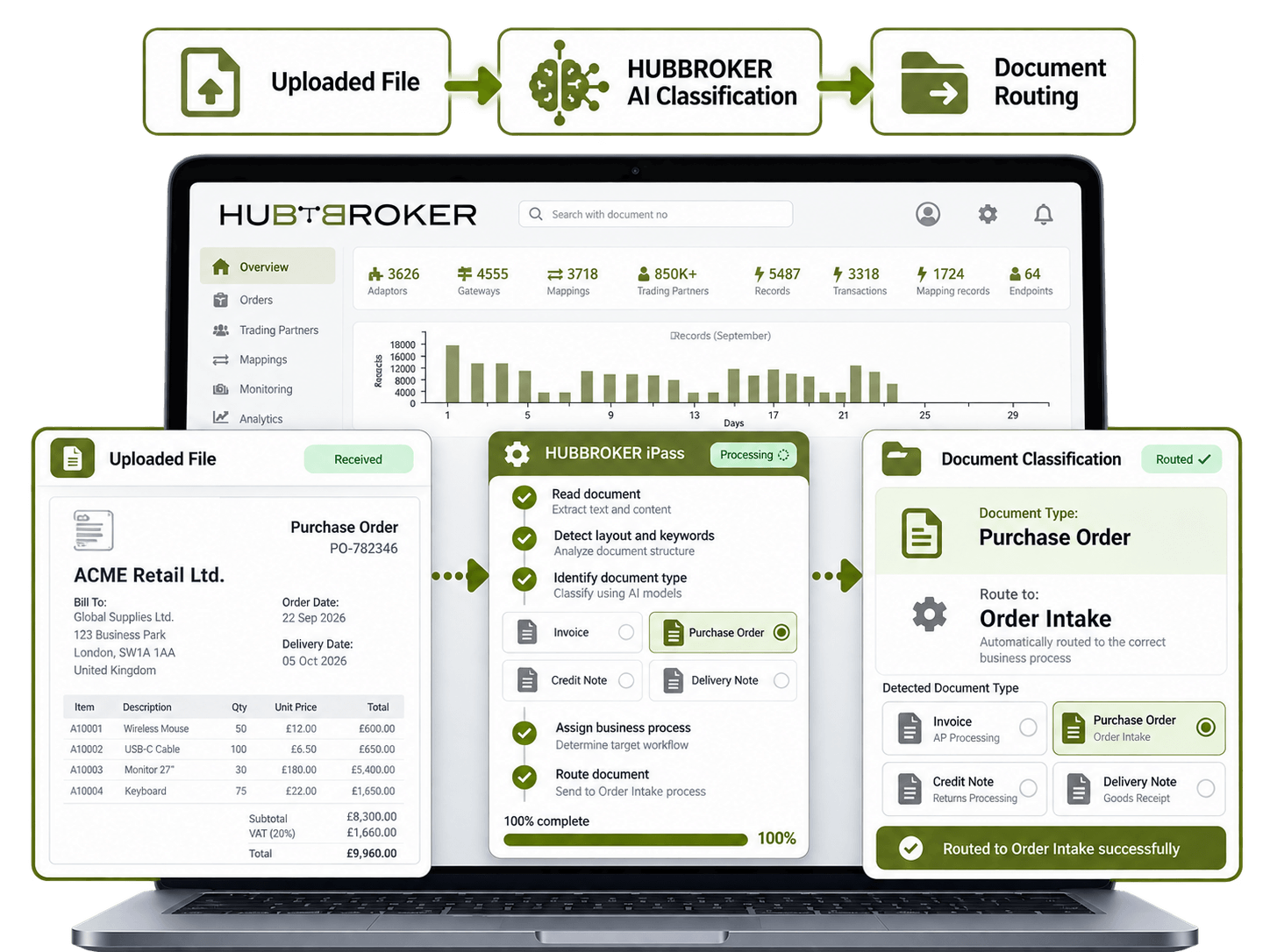
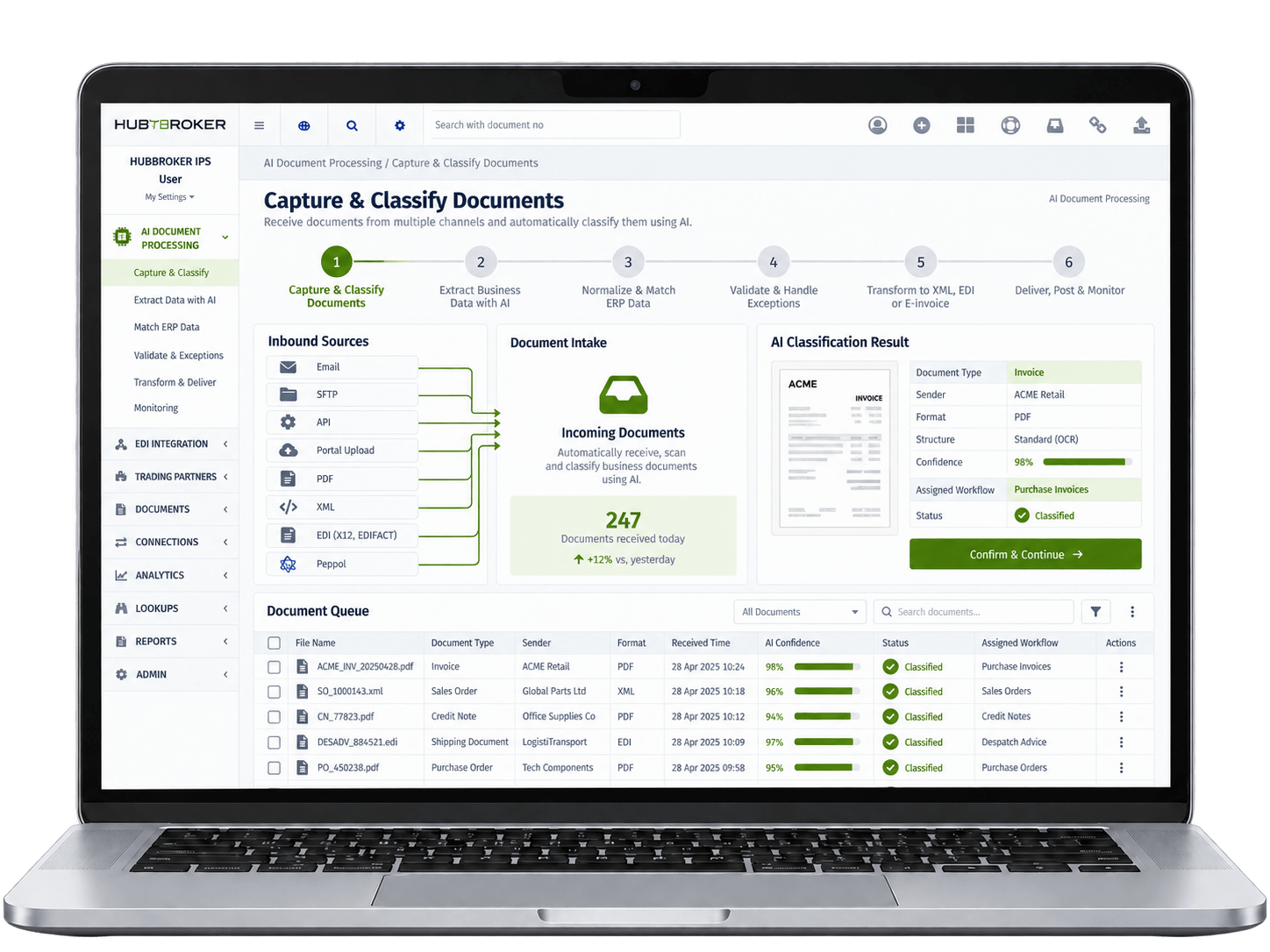
Identify whether an uploaded file is an invoice, purchase order, credit note or another document type so it can be routed to the correct business process without manual sorting.
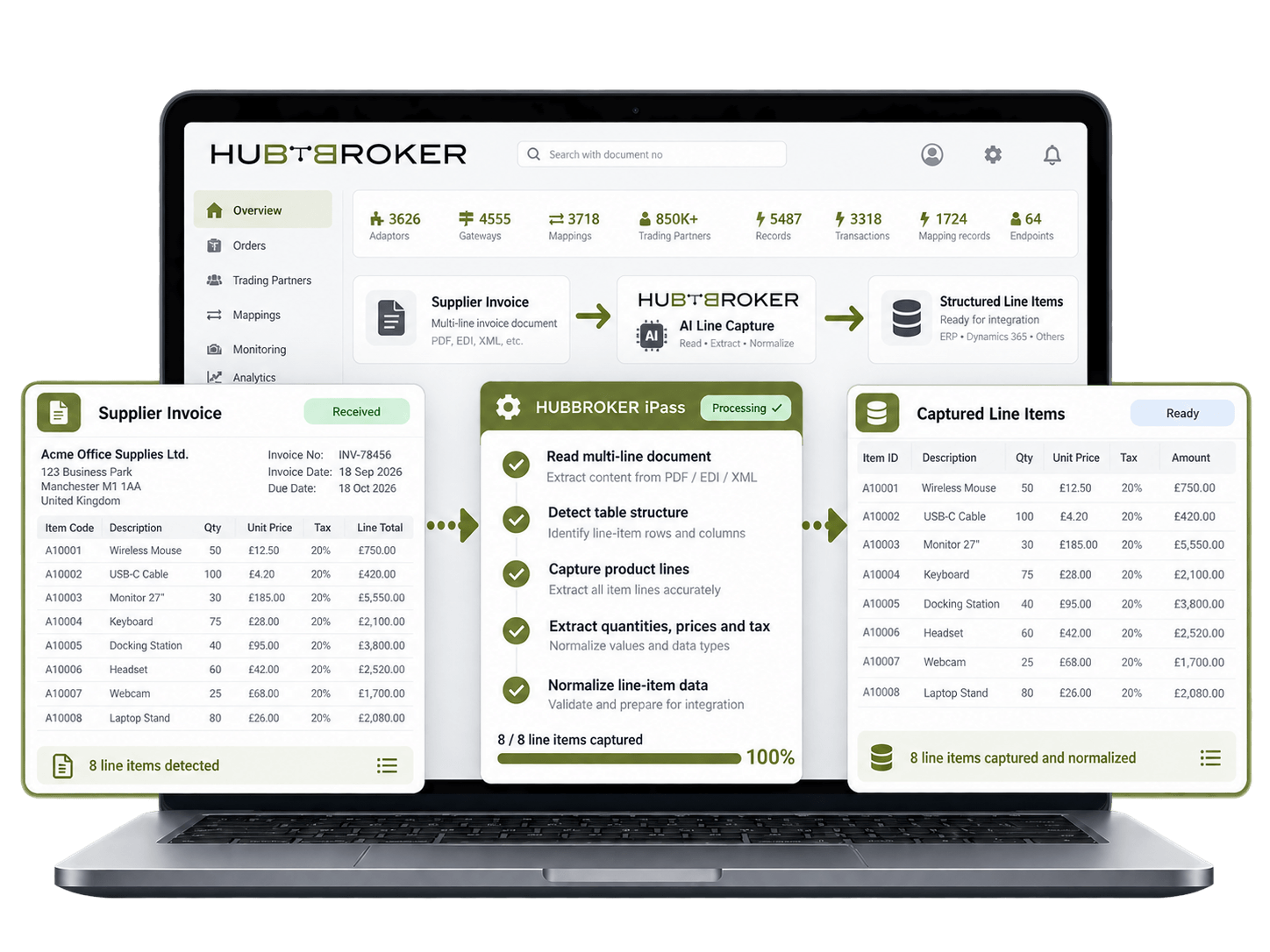
Capture individual product lines, quantities, prices, tax values and descriptions from complex documents so multi-line invoices and orders can be processed without retyping every row.
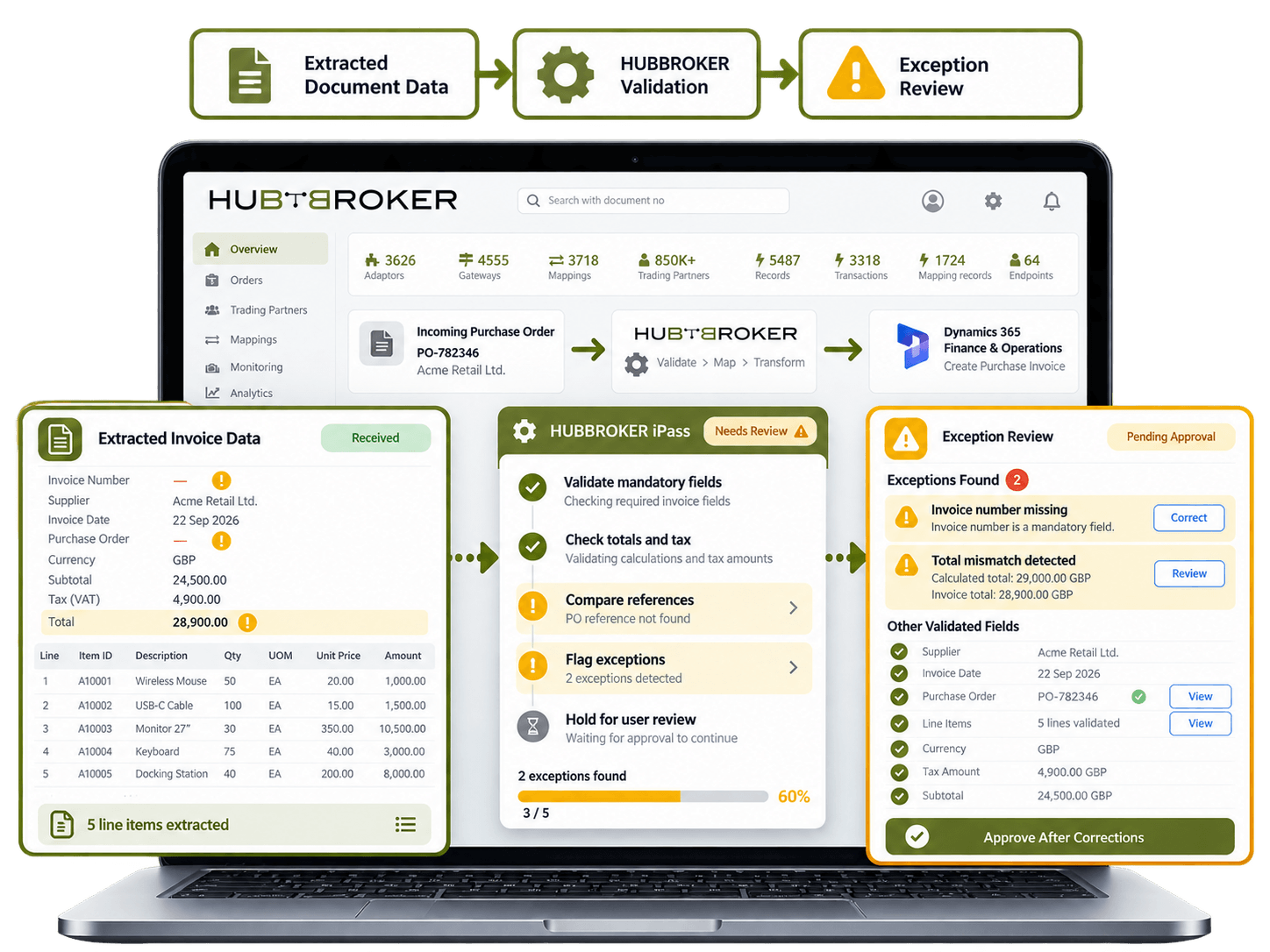
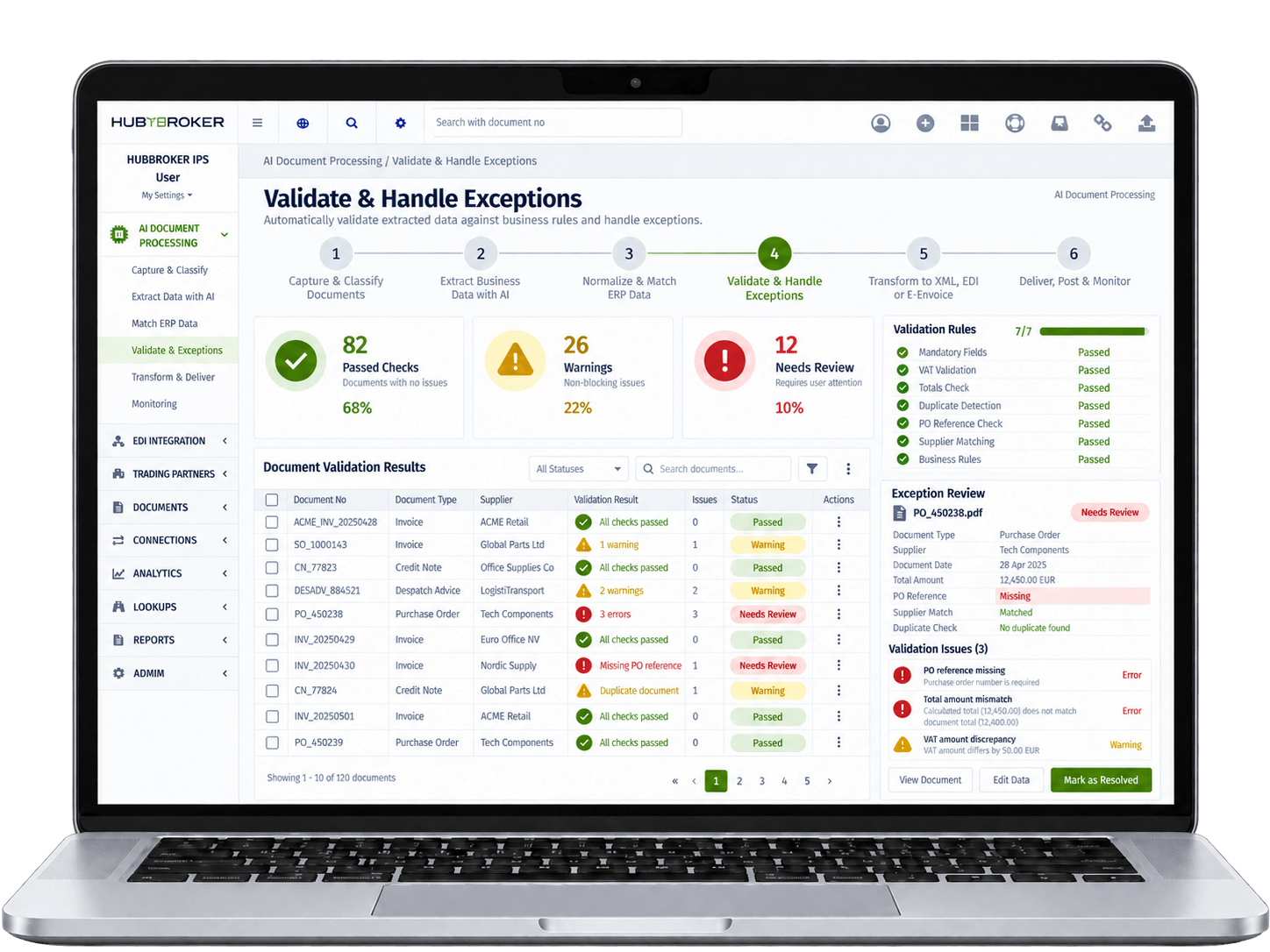
Check extracted data for missing or inconsistent values before processing. Users can review exceptions such as missing invoice numbers or unmatched totals before the document moves forward.
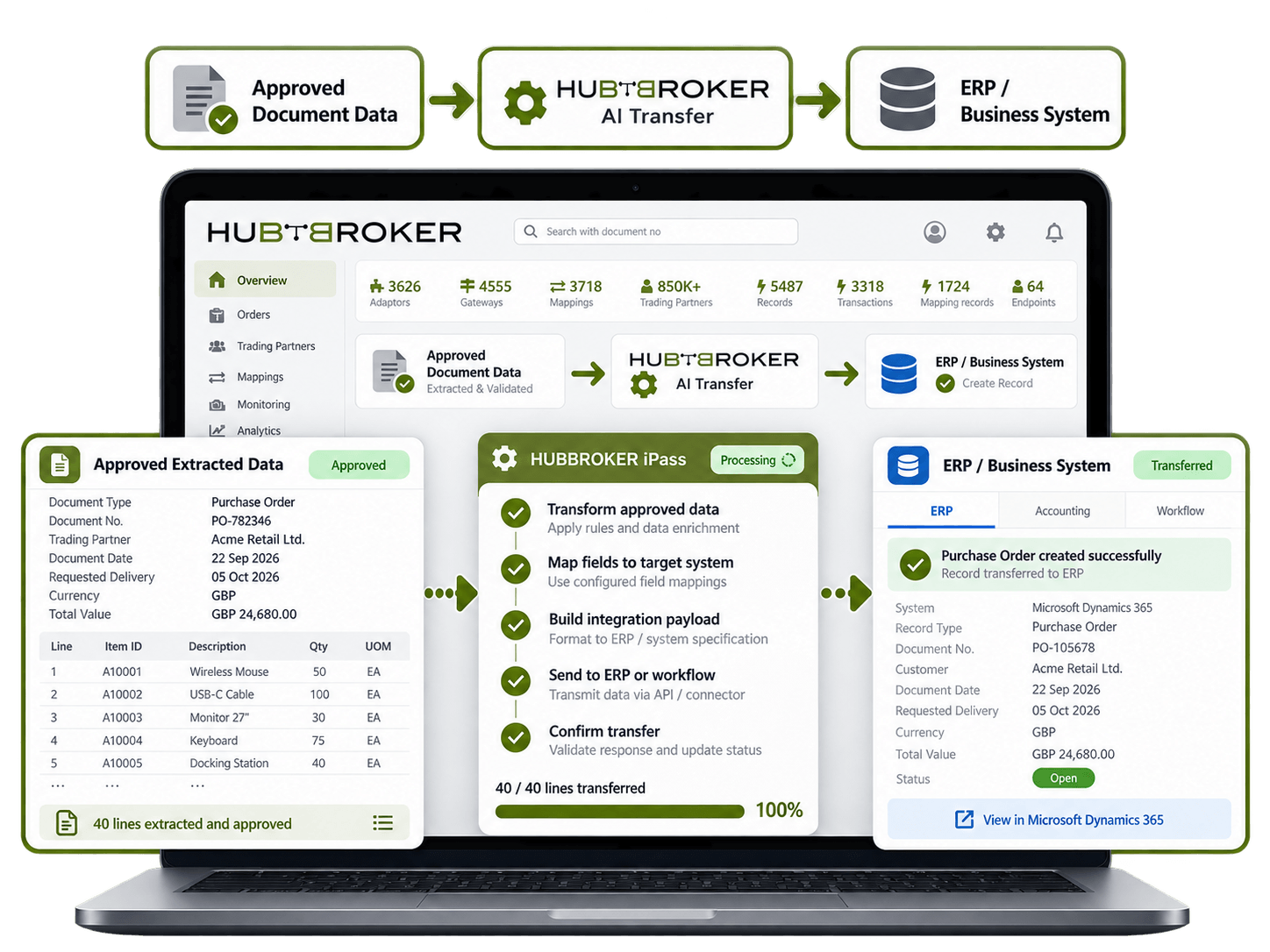
Send approved document data into your ERP, accounting or workflow system so information captured from documents can be used directly for purchasing, invoicing or finance processes.
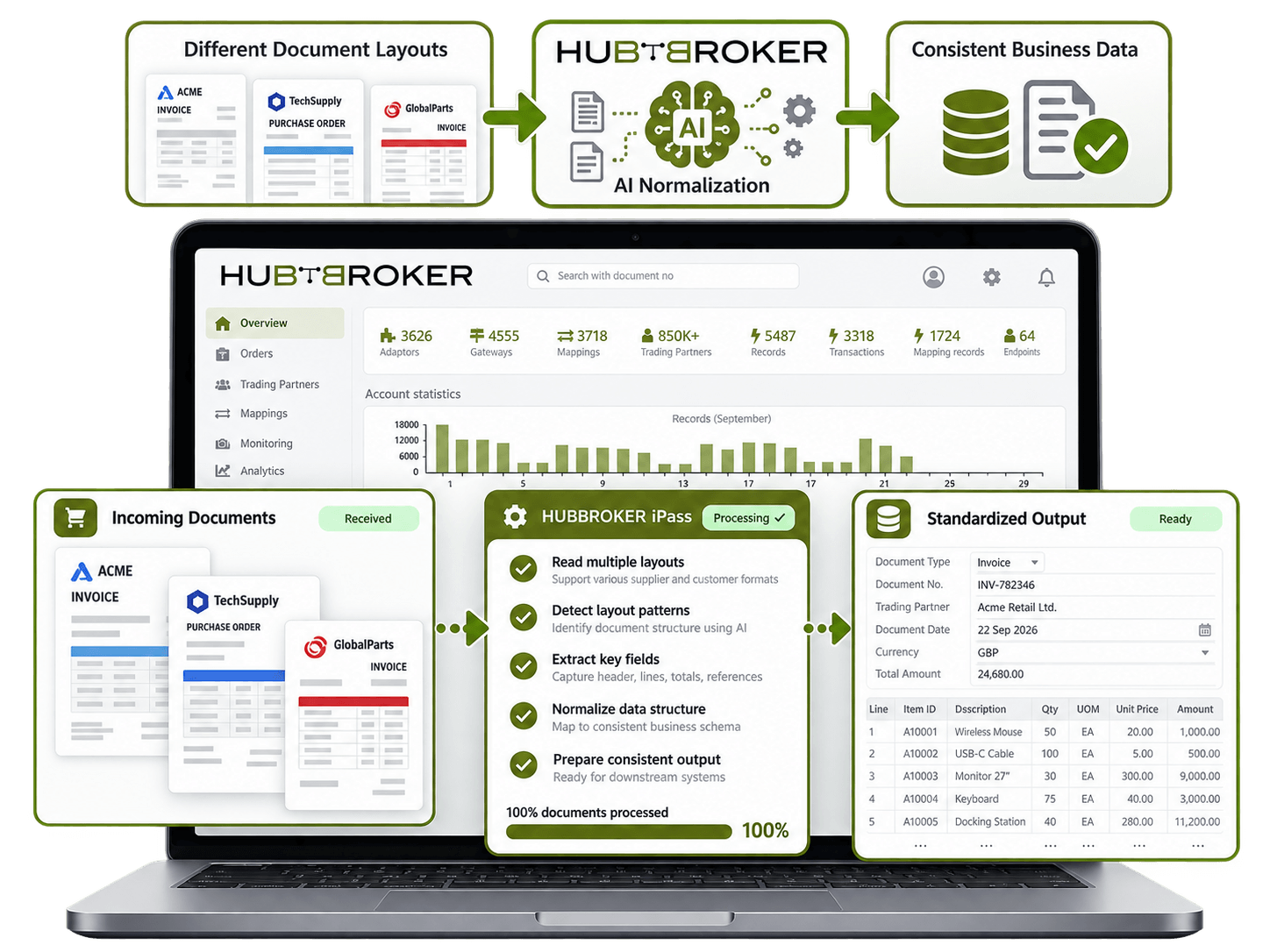
Process documents from different suppliers and customers even when layouts vary. Users can handle many document designs while keeping the resulting business data in a consistent structure.
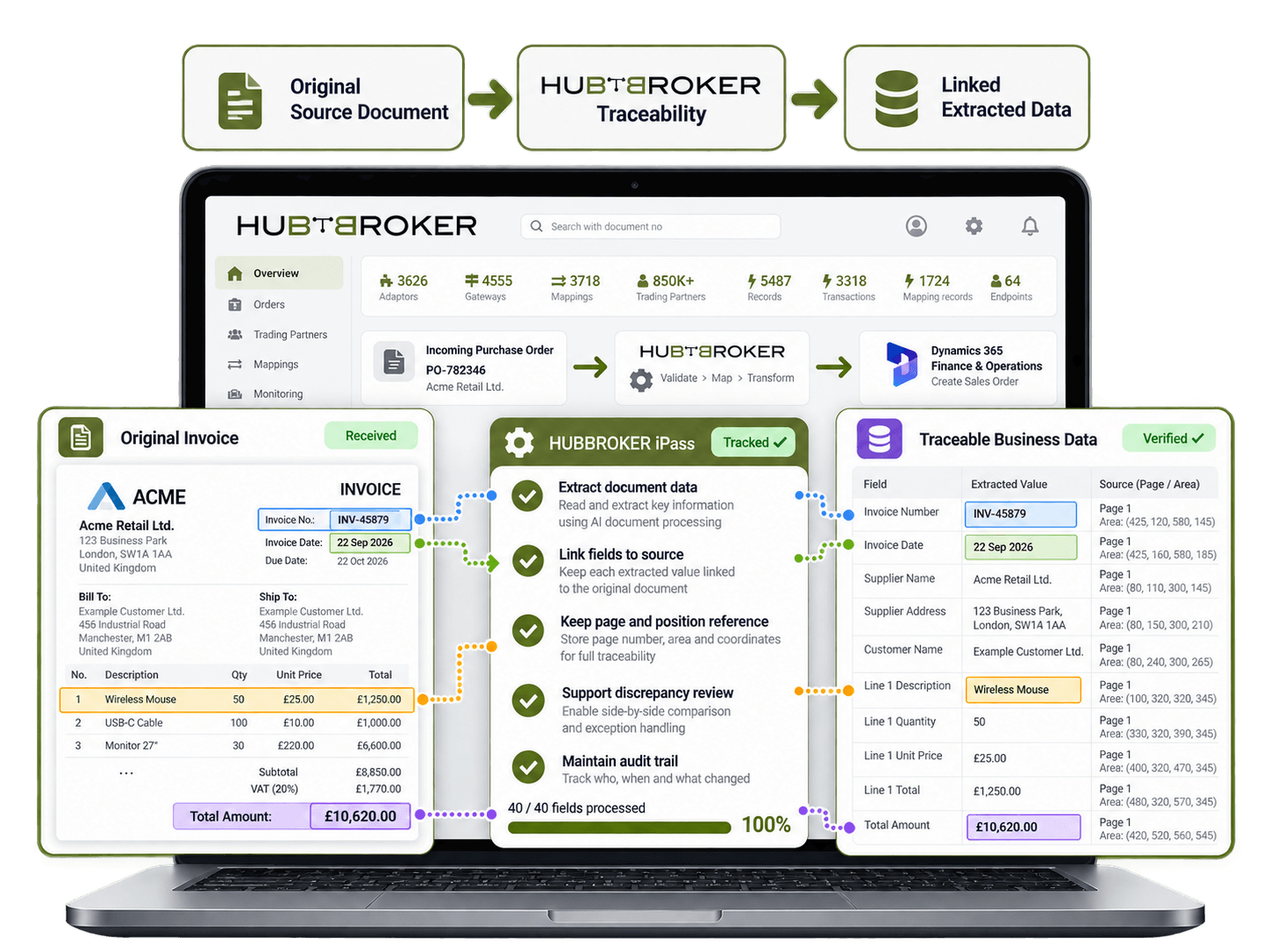
Keep extracted data linked to the original document so users can compare values, review discrepancies and confirm where each field came from during approvals, audits or customer queries.
Receive invoices, credit notes, orders, PDFs, scanned files, XML, EDI, UBL, or Peppol documents from email, SFTP, API, portal, or other connected source. AI checks the document type, sender, and basic structure, then sends each document into the correct processing workflow.
AI reads invoices, PDFs, scans, and structured documents to capture the important business information from each file. This can include supplier or buyer details, invoice number, PO reference, dates, VAT, currency, totals, payment data, product codes, quantities, prices, and complete line-item information.
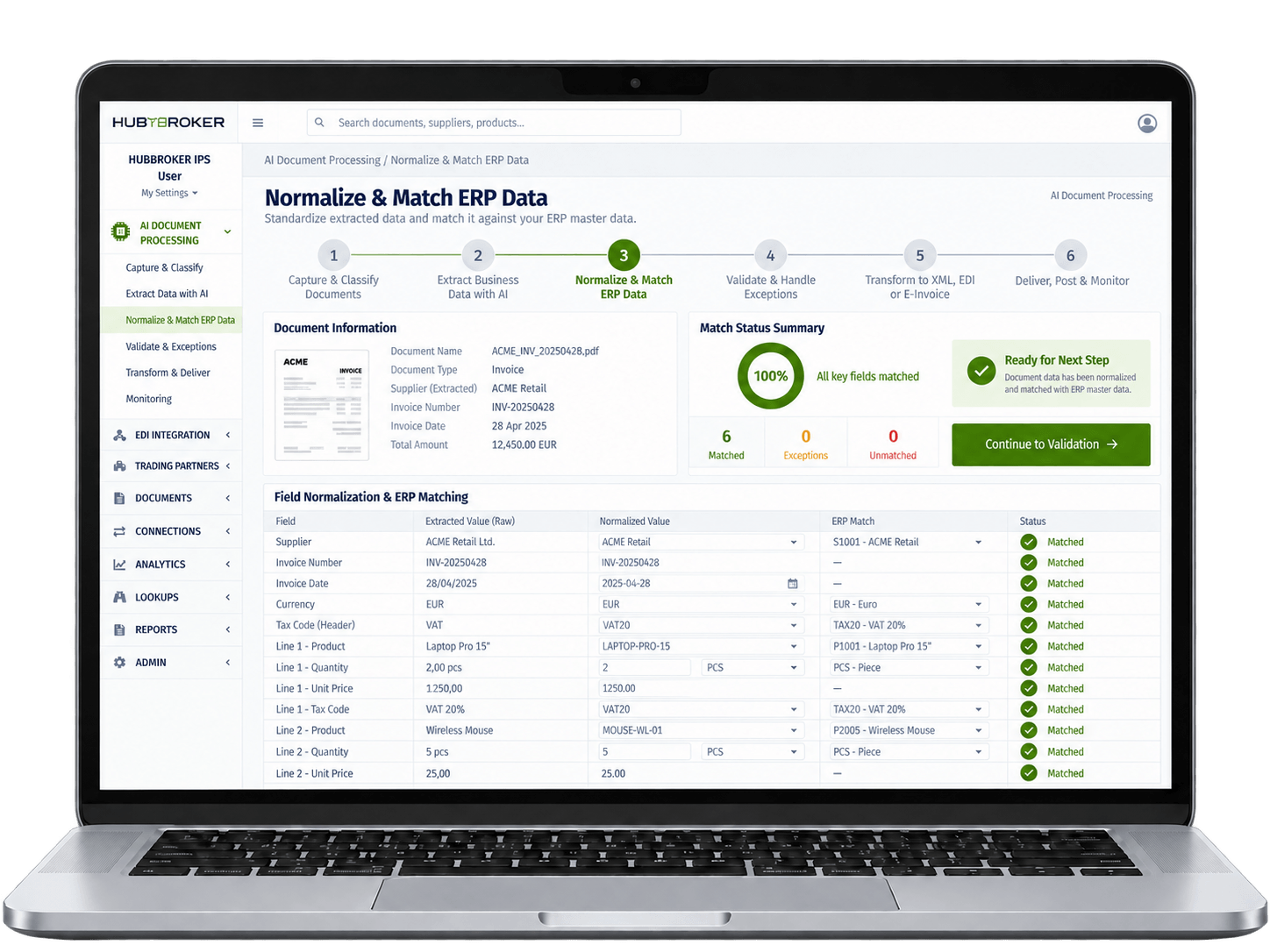
Extracted values such as dates, decimals, currencies, tax codes, units, product IDs, customer numbers, and supplier references are changed into a consistent format. The system then matches this information with ERP master data, purchase orders, lookup tables, and configured cross-references.
The document is checked for required fields, VAT, totals, duplicate invoices, PO references, supplier records, calculations, and configured business rules. Fields with low confidence or incorrect values can be marked for review and corrected within the processing workflow.
Once the business data is checked and approved, it is mapped into the format required by the receiving system or trading partner. This can include ERP-ready data, HubBroker XML, UBL, Peppol BIS, EDIFACT, CSV, or another customer-specific XML format.
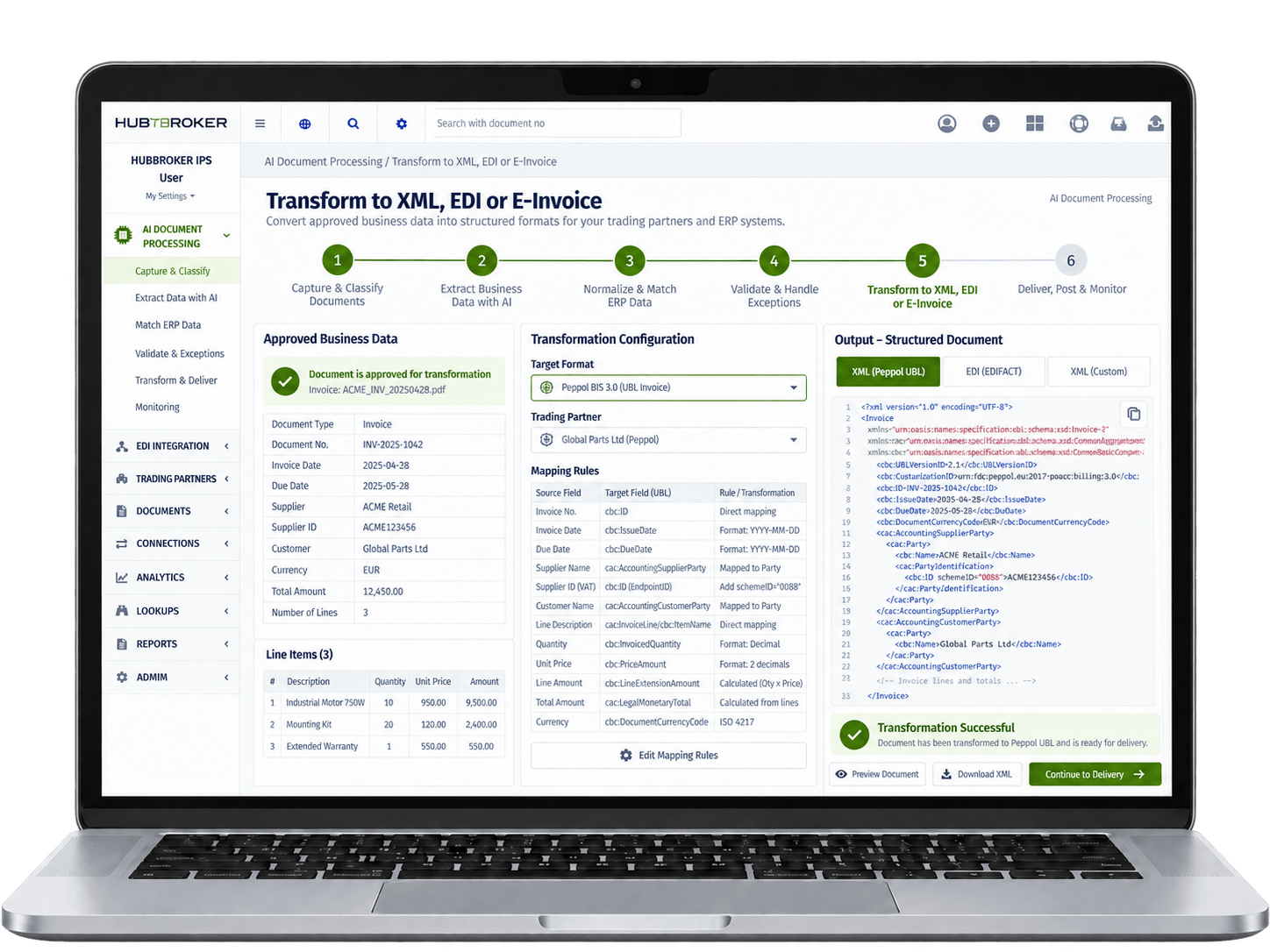
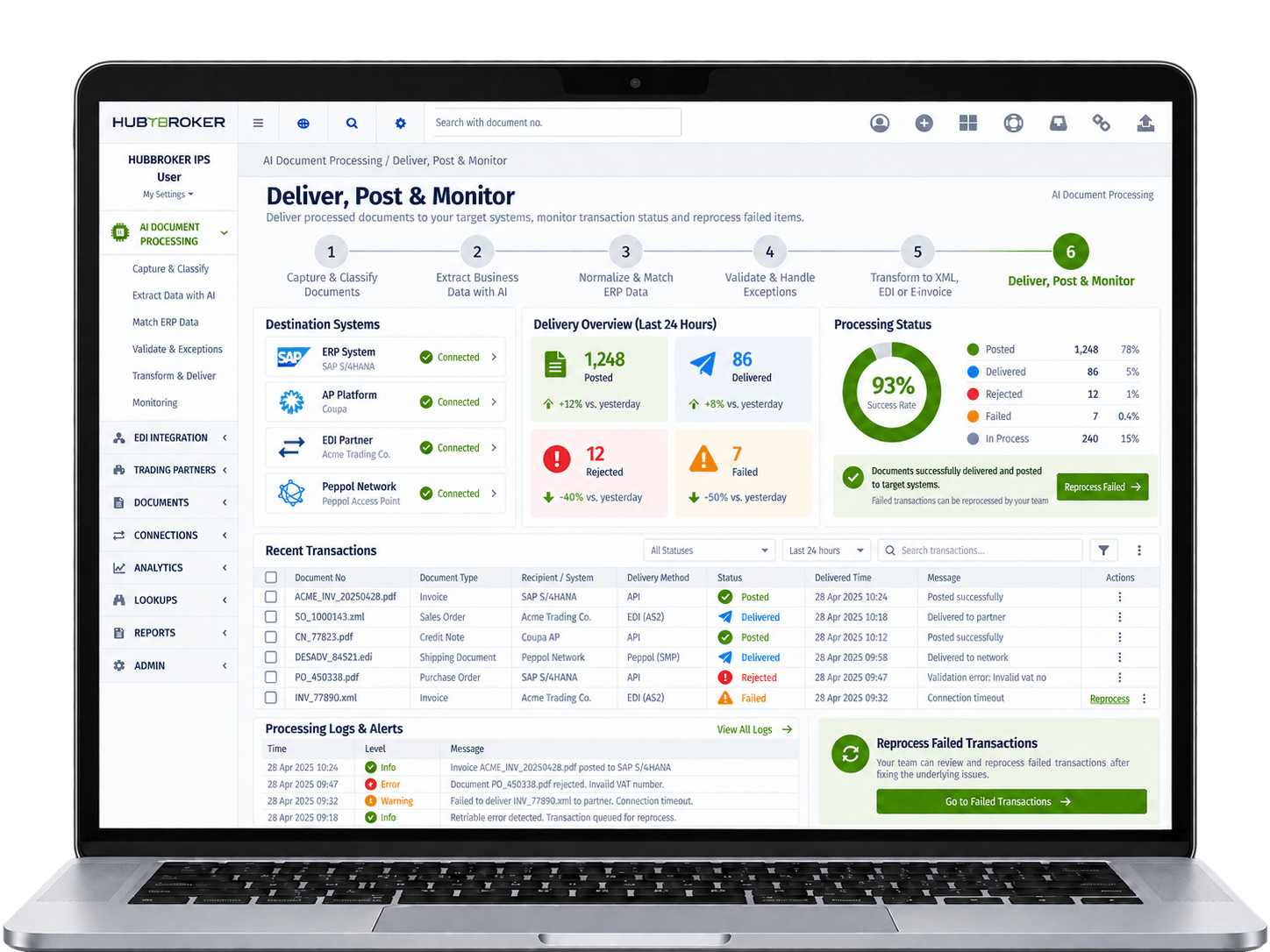
Validated documents are automatically sent to the ERP, accounting system, AP platform, EDI partner, Peppol network, marketplace, or another connected application. The system tracks whether documents are posted, delivered, rejected, or failed during processing, while transaction logs stay available for review.









AP teams stop typing invoice headers, line items, and tax fields from PDFs and scans, so their time goes into supplier issues, approvals, and exceptions rather than basic data entry tasks.
Invoices arriving through email, post, or portals are captured and processed within minutes, so approval, payment, and supplier discount cycles all start sooner than they typically do today.
AI extraction combined with rule-based validation reduces typing errors, missing fields, and mismatched VAT or PO data, so your ERP holds cleaner records and downstream reporting stays reliable.
Only invoices that genuinely need a human are surfaced to AP, with extracted data and the original document presented together, so resolution is faster and easier for everyone in the workflow.
Invoice volume can grow with the business, new suppliers, and new entities without adding the same proportion of AP headcount, because automation absorbs the routine majority of the work involved.
Each invoice keeps its original document, extracted fields, validation results, and posting history together, giving auditors and finance a clear, searchable trail across your entire AP process.













Our IDP combines AI extraction with your supplier, tax, and PO rules, so the system understands not just the layout of an invoice but how your business actually processes that invoice in real life.
IDP is part of a wider platform covering EDI, Peppol e-invoicing, and ERP API integration, so structured and unstructured invoices land in your finance system through one consistent path.
Posting, matching, and approval flows are designed around real ERPs like Business Central, SAP B1, Visma e-conomic, and Uniconta, so AP teams keep their familiar tools and workflows in place.
Where suppliers are Peppol-capable, invoices flow as structured e-invoices through our certified Access Point, so you move toward genuine e-invoicing rather than scanning the same PDFs forever.
Extraction is tuned to the suppliers, formats, and document layouts that actually arrive in your AP inbox, so accuracy improves over time rather than staying stuck at a generic baseline level.
Our teams in Denmark and India support tuning, exception review, and new supplier onboarding directly, so IDP keeps performing as your supplier base, regulations, and invoice volumes change.

ERIKS is a globally recognized industrial service provider with over 80 years of experience in delivering technical products, engineering expertise, and tailored services.
Read More
Orkla House Care Europe, a division of Orkla ASA, is a leading manufacturer and distributor of high-quality painting tools for both professionals and DIY users. Operating across Sweden, Denmark, Norway, and the UK.
Read More
Ammega Group, through its Megadyne division, is a global leader in the manufacturing and distribution of power transmission belts and industrial conveyor solutions.
Read More
TDC Brands is a Danish telecommunications group, home to six brands: YouSee, TDC Erhverv, Telmore, Hiper, eesy and Relatel.
Read More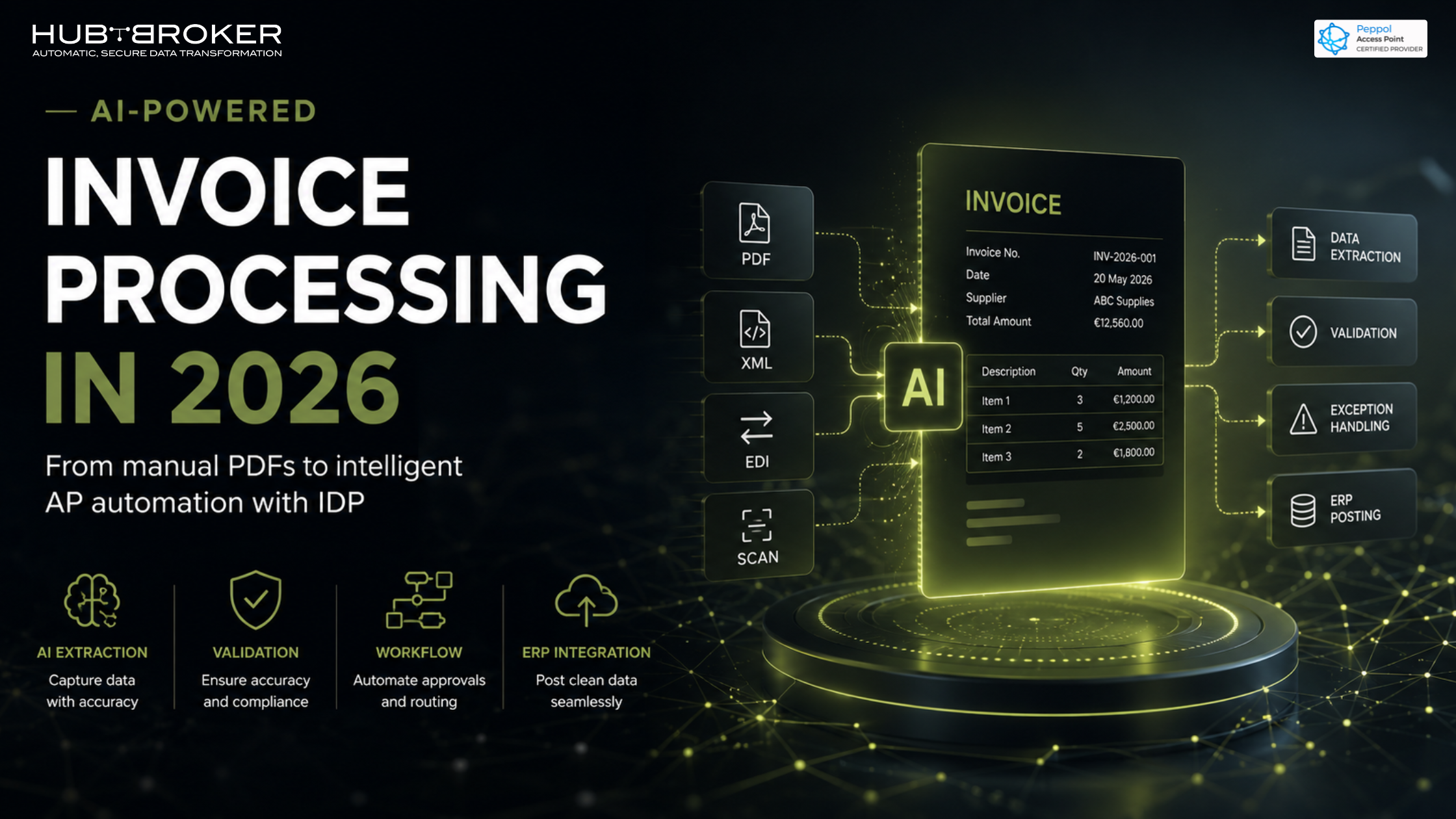
Learn how AI improves invoice capture, validation and automation with HubBroker IDP and ERP integration.
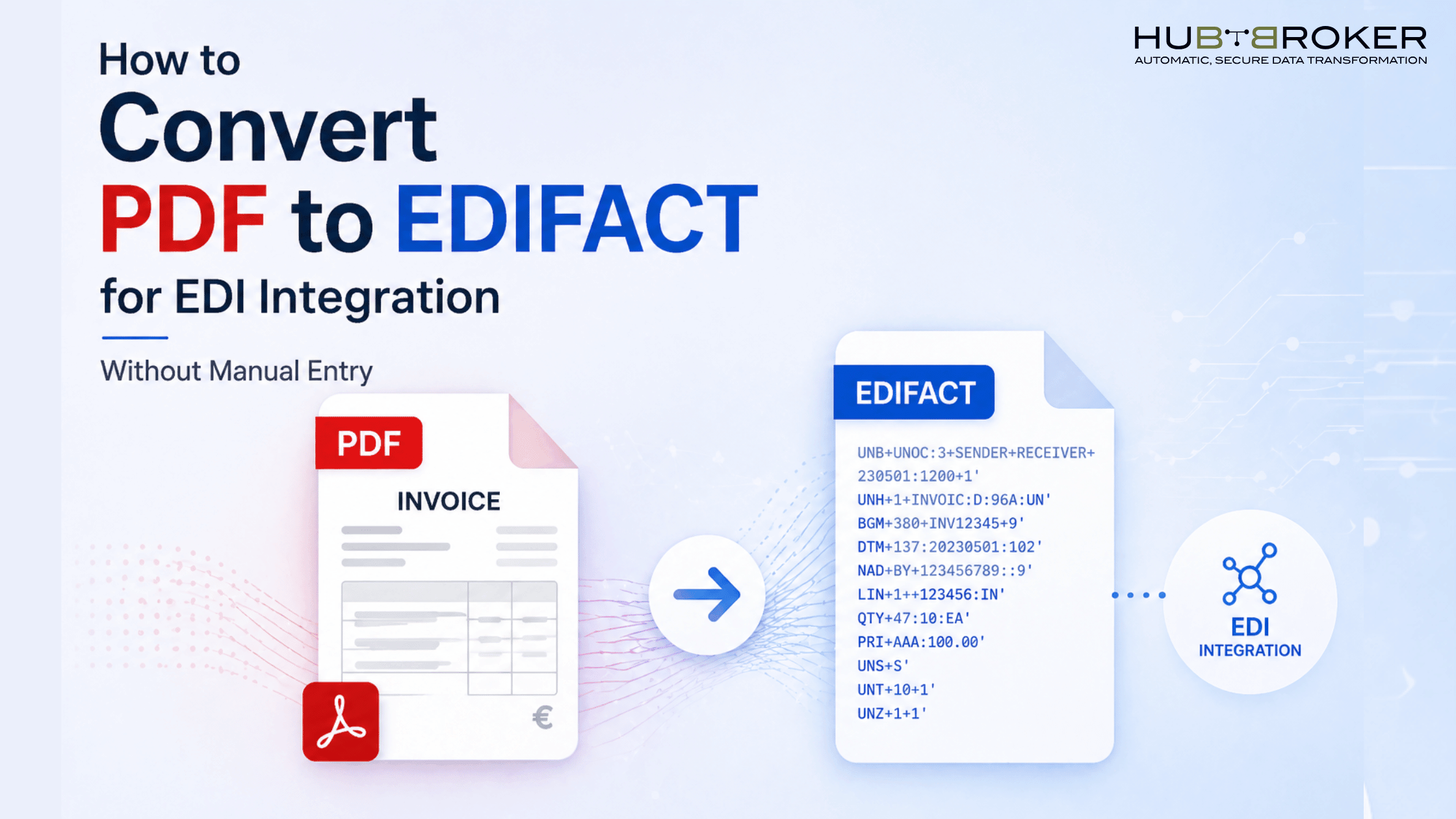
Convert PDF documents to EDIFACT automatically with accurate data extraction mapping and EDI integration to reduce manual entry errors and processing time
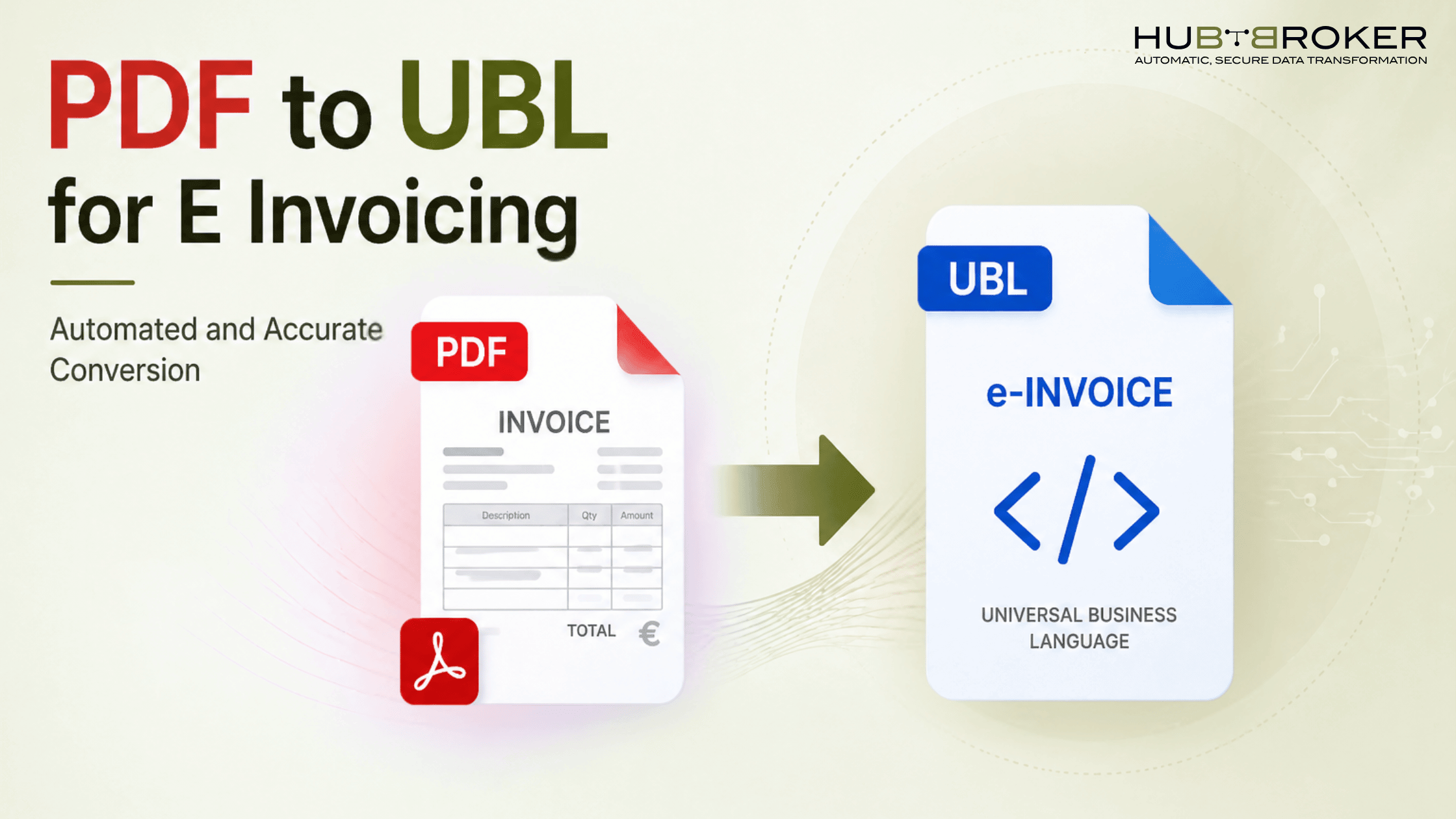
Convert PDF invoices to UBL automatically with accurate data extraction validation and ERP ready e nvoicing workflows for faster compliant processing
Intelligent Document Processing (IDP) is an AI-driven automation technology that classifies, extracts, and validates meaningful information from unstructured and semi-structured documents (such as PDFs, emails, forms, and images). It eliminates manual data entry by converting raw text into structured, actionable data ready for enterprise systems.
An IDP tool most commonly stands for Intelligent Document Processing, which is an AI-powered software that automatically reads, extracts, classifies, and structures data from unstructured files (like PDFs, emails, and scans) into usable digital formats.
An Integrated Development Plan (or IDP for short) for the district municipality refers to a comprehensive strategic plan that outlines the development priorities, goals, and projects for a specific district area, taking into account social, economic, and environmental factors, with the aim of coordinating efforts.
HubBroker solutions support businesses across industries where reliable data exchange, automation, compliance, and partner connectivity are essential.
Support fast-moving order, invoice, inventory, and marketplace workflows with automated document and system integrations.
Help manufacturers connect suppliers, customers, ERP systems, and logistics partners for smoother production and supply chain operations.
Enable structured data exchange for shipping, delivery, tracking, invoicing, and partner communication across logistics networks.
Support secure and accurate document exchange where compliance, reliability, and process efficiency are critical.
Help financial businesses improve document processing, data accuracy, reporting flows, and secure business communication.
Automate order-to-cash and procure-to-pay workflows across customers, suppliers, warehouses, and ERP systems.
Bredgade 45B 1260 , København K Capital Region, Denmark
D-1010, The First, B/H ITC Narmada, Ahmedabad, Gujarat, 380015, India